
Best Trail Running Poles 2026: Tested by an Ultra Runner
The best trail running poles for 2026, tested on real ultra and mountain races; lightweight carbon folding poles for ultra running, trail racing, and fastpacking.

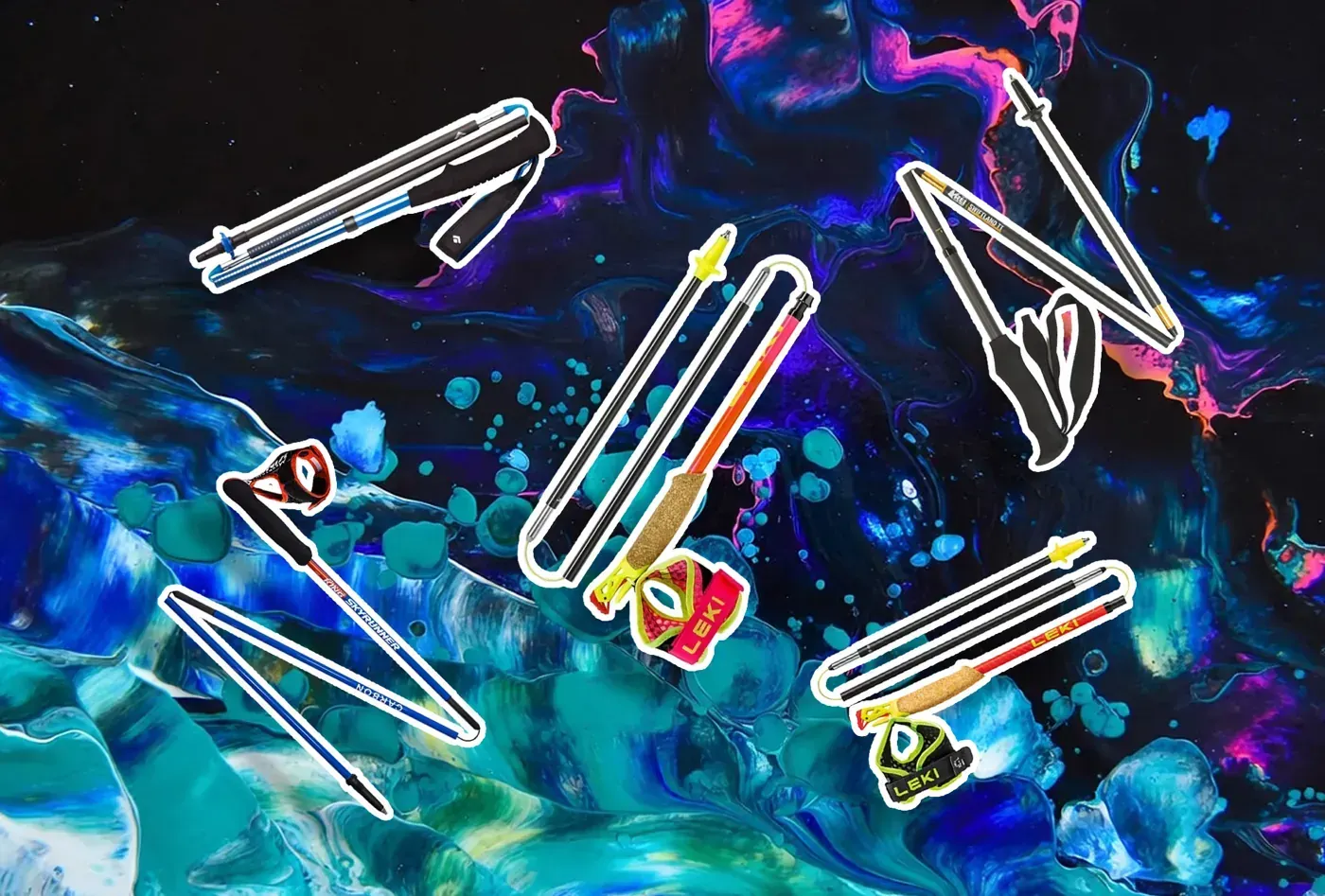
Welcome to our best trail running poles buyer's guide; featuring the top lightweight, foldable carbon poles for trail runners, ultrarunners, and fastpackers.
Every pole on this list is one I have personally used and tested on real mountain terrain, including ultramarathons, steep ascent training sessions, and multi-day mountain races.
Looking for hiking poles instead? See our roundup of the best trekking poles for hiking.
My recommendation for most runners is to go for the lightest carbon folding poles you can afford. Weight matters more than people expect, both in your hand over a long race day and on your back when they're stowed in your running hydration pack.
Best Running Hydration Vests 2026: Tried and Tested
The best running hydration vests for every distance, from 5k to trail ultras. Every pick on this list has been personally tested.
 Alastair Dixon
Every pole in this list is carbon and foldable, because I genuinely don't think you should be running with anything else.
If you purchase through links in this article, we may earn a small affiliate commission. Thank you for your support.
Quick Picks: Best Trail Running Poles at a Glance
| Pole | Best For | Weight (pair) | Price |
|---|---|---|---|
| LEKI Ultratrail FX.One | Best overall — training & racing | 12.9 oz / 366g | $220 |
| Black Diamond Distance Carbon Z | Lightest folding pole — racing | 9.9 oz / 281g | $190 |
| LEKI Ultratrail FX.One Superlite | Lightest LEKI — race-day only | 9.6 oz / 272g | $250 |
| REI Co-op Swiftland TT Carbon | Best value folding pole — US runners | 11.2 oz / 318g | $189 |
| Mountain King SkyRunner Edge | Most innovative grip system — UK/EU runners | 9.7 oz / 276g | £200 |
Benefits of Using Trail Running Poles
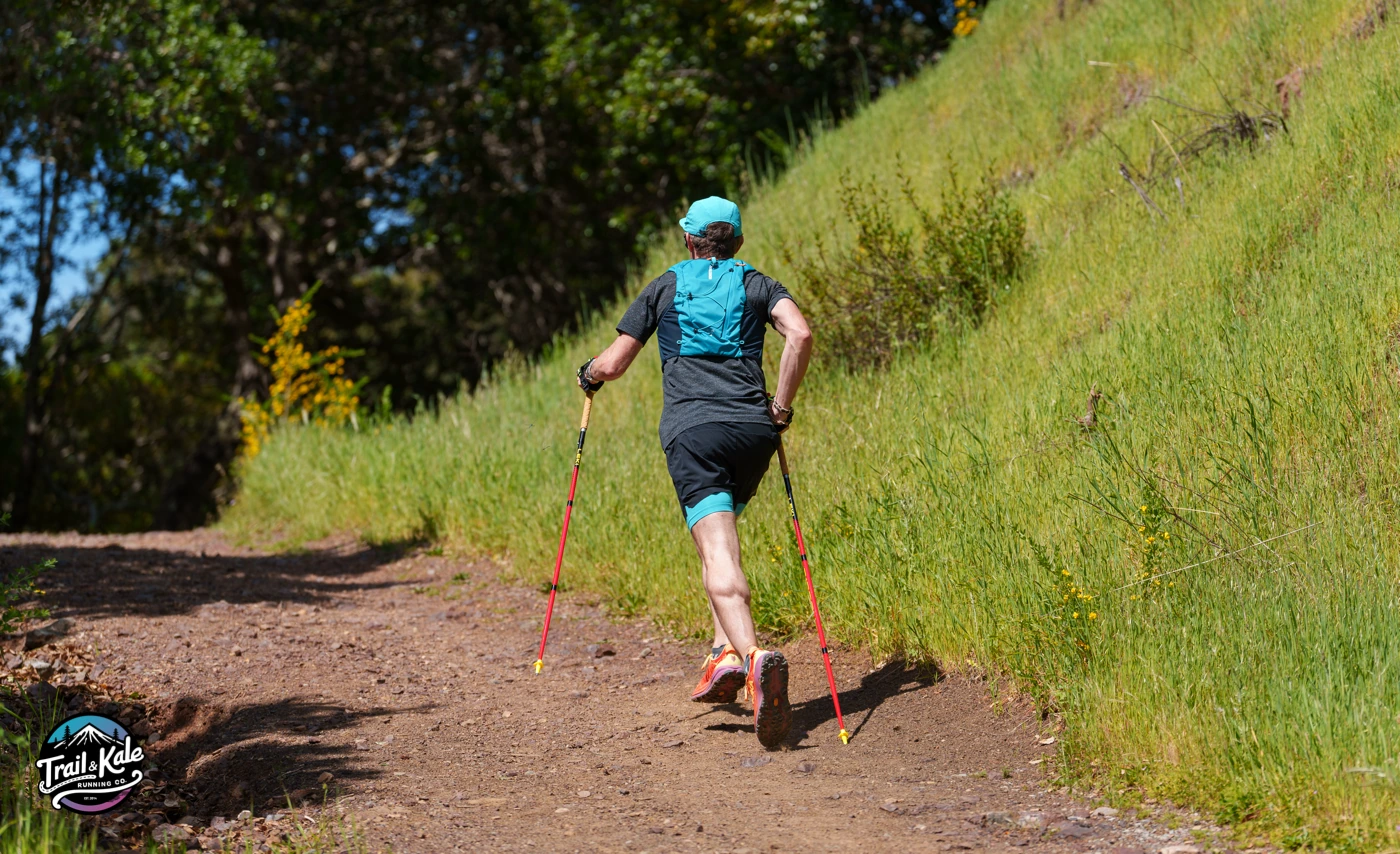
If you haven't used poles before, here's why they're worth it, especially once your races start involving serious vertical gain:
- They make light work of steep climbs, letting your arms share the load with your legs.
- They save your leg muscles on long, hilly races; that 40-mile mark will feel very different with poles than without.
- They help you find a rhythm on long ascents, which translates into more consistent pacing.
- They add stability and confidence on technical descents, letting you probe for solid ground.
- In busy races, they're genuinely useful for personal space on single-track. Just be mindful of other runners.
RUNNING WITH POLES GUIDE: If you haven't used trail running poles before, read our Trail Running with Poles advice guide for a deep dive on technique, when to use them, and their pros and cons.
What is Trail Running? The Complete Beginner’s Guide (2026)
How to start trail running like choosing your first trail, knowing what gear you need, running safely on uneven ground, and building confidence without chasing pace.
Alastair Dixon
New to trail running altogether? Our beginner's guide to trail running is a great place to start before you add poles into the mix.
How to Choose Trail Running Poles
Before getting into the picks, here's what actually matters when choosing poles for running, as opposed to hiking, where the criteria is slightly different.
Weight. For running, every gram counts more than it does on a hike. Under 400g per pair is a reasonable target; under 300g is ideal for race day. All carbon poles deliver this; aluminum does not.
Material. Carbon only. Aluminum poles are fine for hikers but too heavy for running. All five picks below are carbon.
Folding vs telescoping. Folding (Z-fold) poles pack down into short segments you can stow in a vest or belt. Telescoping poles collapse but stay long and can't go in a pack. For running, you want folding; you'll be stowing them constantly. Every pole on this list folds.
Fixed vs adjustable length. Most race-focused folding poles are fixed length, it saves weight and eliminates the locking mechanism. Choose your size carefully (see the sizing guide below) and you won't miss the adjustability.
Sizing. As a general guide: hold the pole with your arm at your side and elbow at 90 degrees; your forearm should be parallel to the ground. Have your shoes on when you measure. Most brands offer 5cm increments from 105–135cm.
Basket size. Smaller "running baskets" are lighter and won't catch on roots and rocks. Avoid large hiking baskets for trail running, most of us opt for no basket, and leave the tip free to bite the ground.
The Best Trail Running Poles for 2026
1. LEKI Ultratrail FX.One — Best Overall
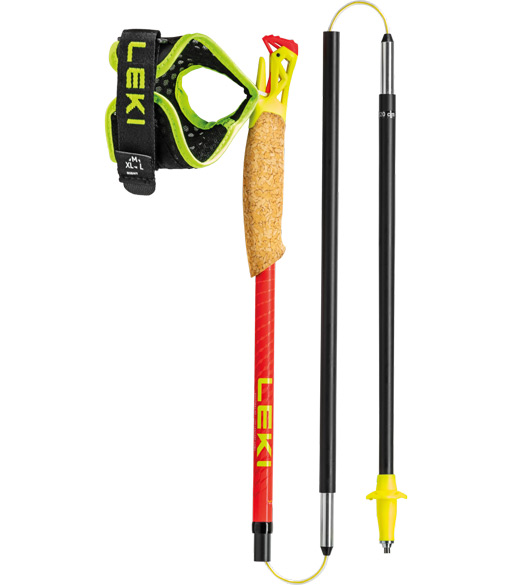
Price: $220 at LEKI | Weight: 12.9 oz / 366g (pair including wrist straps, 120cm) Material: Carbon | Sections: 4-section fold | Packed length: 14.2 in / 36cm
Read my full LEKI Ultratrail FX.One review for the complete breakdown.
The LEKI FX.One is my personal go-to and the pole I'd recommend to most trail runners. I've raced and trained with these extensively in the mountains of Northern California and in international ultra events, and they hold up better than anything else I've used, with the exception of the Black Diamond pick below.
The 16mm carbon shaft is the most durable in the Ultratrail lineup, built for the kind of daily bashing that training puts poles through, and the push-button fold means you can stow and deploy them in seconds.
The big upgrade in this generation is the Trail Shark grip system, which LEKI developed specifically for trail running. The air-channel construction cuts grip weight by 30% compared to the old Shark system, and the Shark Frame Strap Mesh clicks in and out one-handed, even mid-run.
When you're coming off a climb into a fast descent and want your hands free, being able to detach the strap with one finger while moving actually matters.
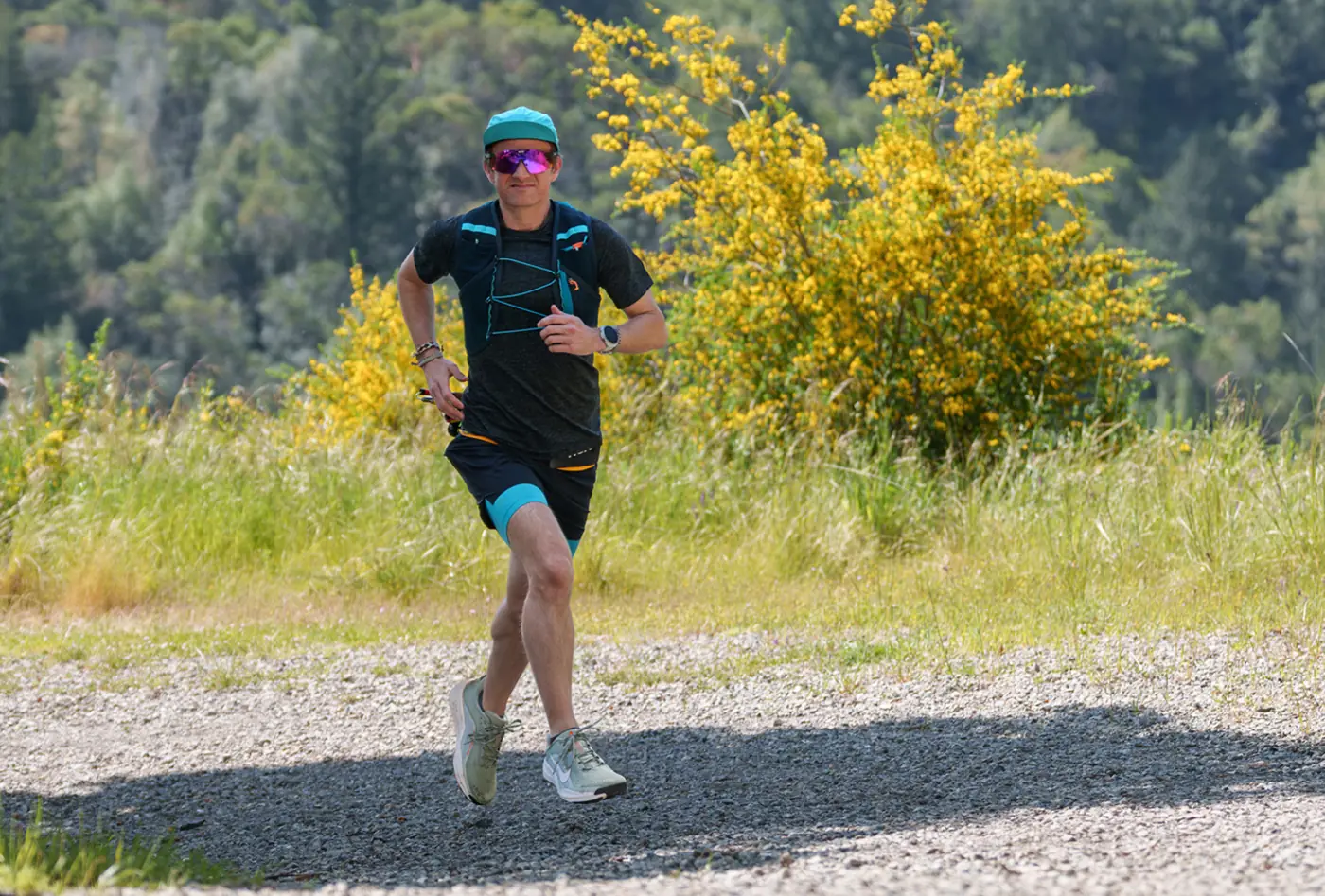
The breathable mesh strap also means your palms stay dry on long efforts. And when they're folded down to 36cm, they disappear into a race vest side pocket or clip to a belt with no drama.
Who should buy these: Anyone training for a mountain ultra — UTMB, Western States, hard mountain 50Ks, alpine fastpacking. These are the best all-round trail running poles money can buy if you want something built to last beyond race day.
One note: If you're exclusively racing and never training with poles, the FX.One Superlite below saves meaningful weight. But for regular training use, the standard FX.One is the more durable and better-value choice.
2. Black Diamond Distance Carbon Z — Lightest Folding Pole for Racing
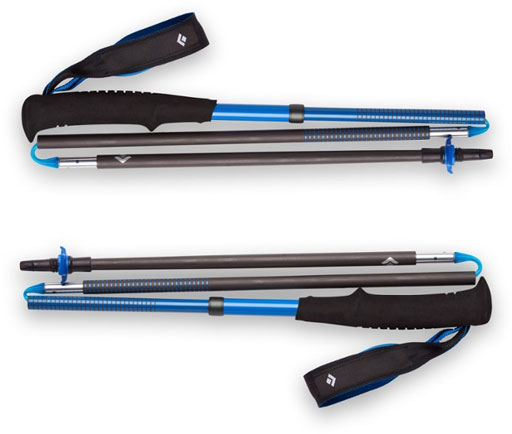
Price: $220 | Weight: 9.9 oz / 281g (pair, 120cm) Material: Carbon | Sections: 3-section Z-fold | Packed length: varies by size
Read my full Black Diamond Distance Carbon Z review for the deeper dive.
At under 10 oz for a pair, the Black Diamond Distance Carbon Z is the lightest fully capable running pole I've tested that doesn't feel fragile. That's a meaningful distinction; there are lighter poles on the market, but most of them ask you to baby them. The Carbon Z, thanks to BD's reinforced locking mechanism and 30%-stiffer joint design, takes genuine running abuse.
The 3-section Z-fold deploys fast with BD's speed-cone system; you shake them open and they lock into place. Easy. The lightweight EVA foam grip is minimal by design with a slim profile that keeps swing weight low and doesn't add bulk. The non-scarring rubber tech tips and interchangeable carbide tips mean you can swap between soft trail and hard surfaces without buying new poles.
Who should buy these: Runners who prioritize absolute minimum weight for racing and are comfortable with fixed-length poles. Also ideal for fastpackers who carry a light pack and want the lowest possible swing weight on long days.
3. LEKI Ultratrail FX.One Superlite — Lightest LEKI, for Racing Only
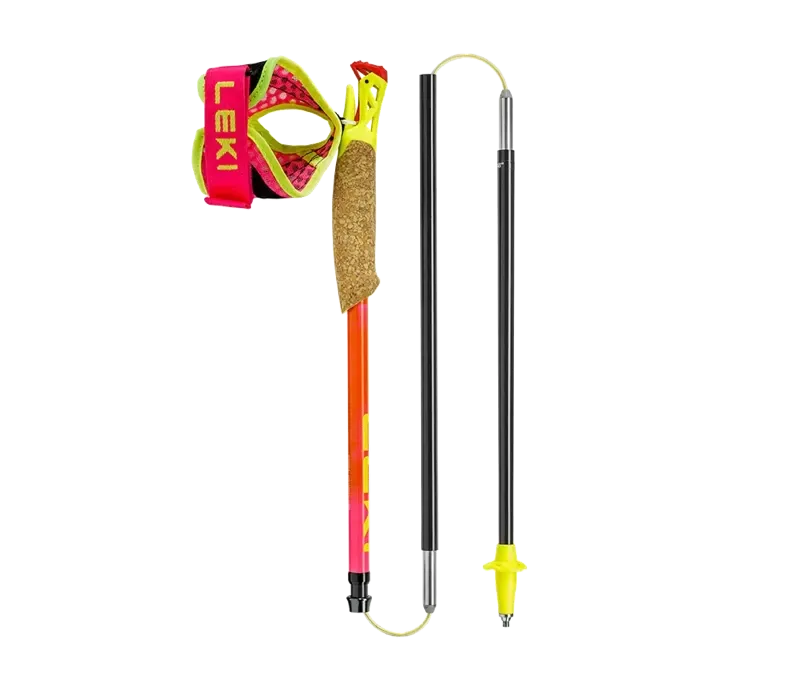
Price: $250 at LEKI | Weight: 9.6 oz / 272g (pair) Material: Carbon | Sections: 4-section fold | Packed length: ~36cm
The Superlite is the competition version of the FX.One; same fold system, same Trail Shark grip, but a thinner 14mm shaft and a lighter overall build. At 9.6 oz for the pair, it shaves nearly 100g off the standard FX.One. For longer mountain ultras where you're carrying poles for hours, that matters.
The trade-off is durability. LEKI is explicit about this: the Superlite is intended for competition use by experienced pole runners, not for daily training. The thinner shaft is more susceptible to damage under load; so a hard plant on a rocky descent can stress it in ways the 16mm FX.One shrugs off. If you're racing with poles regularly and want to reserve your training poles for training, the Superlite as a race-only stick makes real sense. If you only own one pair, stick with the standard FX.One.
Who should buy these: Experienced ultra runners who already know how to use poles efficiently and want maximum weight savings for race day. Not recommended as a first pair or for training.
4. REI Co-op Swiftland TT Carbon — Best Value Folding Pole
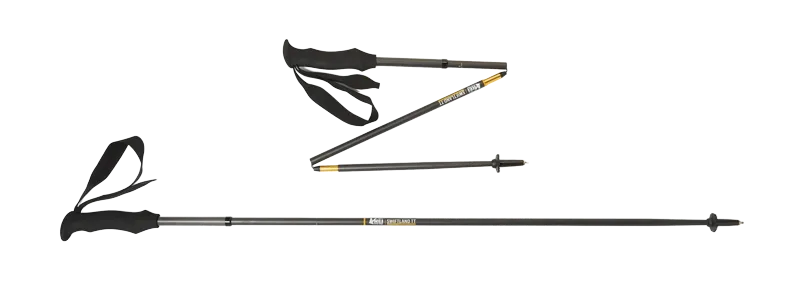
Price: $189 at REI | Weight: 11.2 oz / 318g (pair, 115cm) Material: Carbon | Sections: 3-section fold (Dyneema cord) | Packed length: 14.5 in / ~37cm
The REI Swiftland TT is a significant step up from REI's older Flash Carbon; this one is a proper folding pole, not a telescoping one, which means it packs down to 14.5 inches and will actually fit inside a running vest or pack.
At 11.2 oz for the pair and $189, it goes head-to-head with the Black Diamond Distance Carbon Z on price and comes very close on weight, making it the most compelling value pick on this list for US-based runners.
The 3-piece shafts are connected by Dyneema inner cords and deploy with a simple snap; hold the handle, let the sections hang, pull down until you hear the lock click. Fast and reliable. The EVA foam grip has a good ergonomic shape with a finger divot that provides a natural hold, and the nylon wrist straps are lightweight and adjustable.
Integrated trail baskets and rubber tips (plus carbide tips for harder terrain) are included, and it comes with a mesh carry bag.
If you're US-based and looking to try proper folding running poles without the premium LEKI price tag, these are the ones to get.
Who should buy these: US-based runners who want a true folding carbon pole at under $190. A strong alternative to the Black Diamond Carbon Z, especially if you can catch it on REI Anniversary Sale happening right now (they're only $141.69, right now).
5. Mountain King SkyRunner Edge — Most Innovative Grip System (UK/EU)
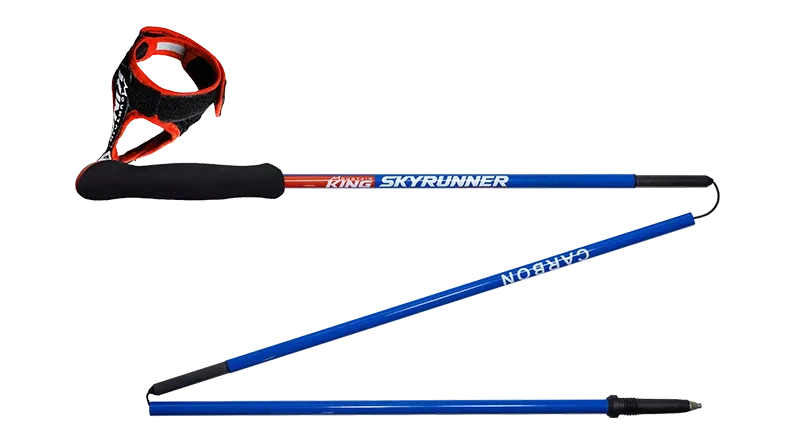
Weight: 9.7 oz / 276g (pair, 120cm including glove) Material: RDC carbon fibre | Sections: 3-section fold | Packed length: 38cm | Price: £200
Mountain King have been making trail running poles in the UK for years; my first ever trail running poles were from Mountain King, and I used them in countless ultras around the world.
The SkyRunner Edge is their most advanced pole yet, and it's built around a genuinely novel idea: the Edge Clip system, an integrated glove-and-grip mechanism that works similarly to LEKI's Trail Shark but is Mountain King's own in-house design.
The concept is smart. The glove clips directly into the pole grip, so the pole becomes a true extension of your arm, you get direct power transfer on climbs without relying on the strap for leverage. The shaft itself is Mountain King's proprietary RDC carbon fibre (the same layup as their flagship SkyRunner Ultra RaceDay), giving it an excellent stiffness-to-weight ratio. At 276g per pair including the glove, it's genuinely competitive with the best racing poles on this list.
⚠️ US availability note: Mountain King poles are manufactured in the UK and primarily sold in the UK and Europe. They're not readily available through US retailers. If you're in the US, the LEKI FX.One, BD Distance Carbon Z, or REI Swiftland TT are all more accessible options. UK and EU runners — these are seriously worth a look.
Frequently Asked Questions
What are the best trail running poles overall? The LEKI Ultratrail FX.One is the best all-round trail running pole for most runners — durable enough for daily training, light enough for racing, with the best grip-and-strap system on the market. For pure racing weight, the Black Diamond Distance Carbon Z at 9.9 oz is the lightest well-built option widely available.
Are poles allowed in trail races? It depends on the race. Most mountain ultras (UTMB, Western States, Hardrock, etc.) allow poles. Many shorter trail races and trail marathons do not. Always check your specific race rules before assuming poles are permitted.
How do I choose the right length for trail running poles? Stand with your shoes on. Hold the pole with your elbow bent at 90 degrees — your forearm should be roughly parallel to the ground. Most brands offer poles in 5cm increments from 105–135cm. When in doubt, size down rather than up for running (shorter poles are better for uphill propulsion).
Are carbon poles worth it for trail running? Yes, without question. The weight and swing-weight savings over aluminum are significant over a long race day. Carbon poles also tend to absorb more vibration than aluminum, which reduces arm fatigue. The trade-off is that carbon can snap under extreme lateral load; don't use them as a crutch or fall-catch. Every pole on this list is carbon.
Can I use trail running poles for hiking too? Absolutely, in fact, all of these poles work well for lightweight hiking and fastpacking. If hiking is your primary use, also consider our best trekking poles for hiking roundup which includes some adjustable-length options better suited to hiking-specific needs.
Final Thoughts
If you're training for your first mountain ultra or want to get more out of your current trail running setup, poles are one of the best gear investments you can make. They extend your range, save your legs, and make long climbs genuinely enjoyable rather than a slog.
My personal recommendation for most runners remains the LEKI Ultratrail FX.One; it's the pole I train and race with, and it's the one I'd buy again without hesitation. If you're purely racing and every gram counts, the Black Diamond Distance Carbon Z is outstanding value at $190.
US runners after the best-value folding pole should look at the REI Swiftland TT Carbon — it's a genuine race-ready folder at a compelling price.
Best Trail Running Shoes 2026: Tested & Ranked
My personal picks across all-mountain, road-to-trail, ultra, and trail racing — every shoe tested firsthand, no filler.
Alastair Dixon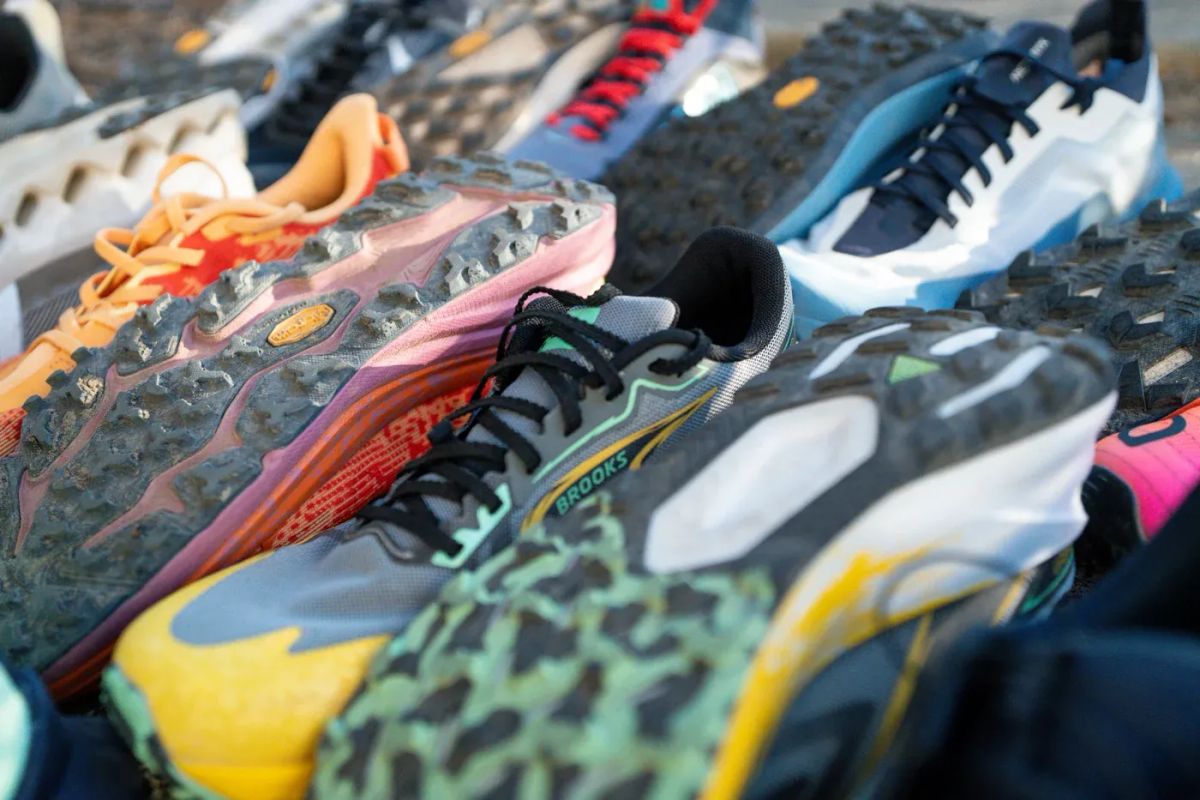
Once you've got your poles sorted, make sure your shoes are up to the terrain too; check out our best trail running shoes roundup for what we're running in right now. And if you're heading into ultra running for the first time, our beginner's guide will help you plan your first ultra from training through race day.
If you haven't already, signup for our free newsletter, for more quality outdoor content like this. -Alastair
Written by

Subscribe to new posts
Gear that earns its place, outdoors and at home | Reviews, Roundups, News








Member discussion